
Best Backlink Marketplaces for Quality SEO Links in 2026 (Ranked)
Buying links “the old way” is getting harder to justify in 2026. Search Engine Optimization (SEO) systems are better at spotting patterns, publishers are stricter about what they’ll accept, and the penalty risk for low-effort third-party content keeps rising. That’s why backlink marketplaces are still popular: they can add structure (filters, workflows, guarantees, dispute handling) to a process that otherwise becomes messy, slow, and risky.
This editorial ranking compares a handful of well-known platforms that help marketers and publishers collaborate on sponsored content, guest posts, and related placements. The focus is not “cheapest links,” but repeatable quality: relevance, editorial control, transparency, and the ability to build links that don’t fall apart the moment search engines tighten enforcement.
Link building in 2026: what’s different (and why marketplaces matter)
Two trends shape off-page work in 2026. First, search systems lean more heavily into understanding context and intent, not just counting links. Second, enforcement around manipulative, low-quality third-party content is more visible than it used to be, especially when it looks like “parasite” publishing on otherwise trusted sites.
In practice, that means a quality placement needs to look and behave like something the host site would publish anyway: topical fit, readable writing, clean disclosure decisions, and a link that makes sense for a human reader. It also means marketers can’t rely on simple metrics alone. A strong Domain Rating (DR) number can still sit on a site that’s editorially chaotic, overloaded with advertorials, or one algorithm tweak away from collapsing.
Backlink marketplaces help because they formalize the process: you can filter by niche and language, compare offerings, standardize deliverables, and (in the better platforms) avoid the worst “pay-and-pray” patterns. They don’t remove risk, but they can reduce it if used with the right criteria.
Quick glossary used in this guide:
- Search Engine Results Pages (SERPs): the pages where search results appear.
- Experience, Expertise, Authoritativeness, Trust (E-E-A-T): a practical content quality framework often referenced in SEO discussions.
- Large Language Models (LLMs): AI systems that power many “AI answers” experiences and influence how content is discovered and summarized.
How this ranking was built (the criteria that matter in 2026)
To keep this ranking useful, it prioritizes operational and quality signals over hype. The best backlink marketplaces in 2026 tend to do well on most of these points:
- Editorial fit controls: strong filtering by niche, country, language, format, and publication rules.
- Longevity expectations: clear publication period policies and stability expectations (so links don’t disappear after a few weeks).
- Transparency: upfront pricing, visible requirements, and predictable deliverables.
- Workflow discipline: briefs, messaging, revision loops, approvals, and dispute handling that don’t devolve into email chaos.
- Publisher quality signals: some form of vetting, scoring, or manual review (even if imperfect).
- Natural outcomes: platforms that make it easier to produce placements that read like legitimate content, not template spam.
- Scalability without obvious footprints: the ability to run campaigns across multiple sites without repeating the same pattern.

Ranking: best backlink marketplaces for quality SEO links in 2026
The list below is ordered for marketers who care about consistency and risk control. “Best” here means: easiest to run repeatable campaigns while keeping placements relevant, stable, and defensible if search policies tighten.
 |
1. GUESTPOSTLINKS
GUESTPOSTLINKS has built a reputation as one of the more operationally transparent marketplaces available in 2026, with a publisher network of 50,000+ manually vetted websites filterable by niche, DA, DR, organic traffic, language, and geography. Live Ahrefs, Moz, and Semrush metrics are visible inside the dashboard before any purchase is made, which removes the guesswork that typically slows down campaign planning. For teams that want full control, the DIY ordering model allows direct publisher selection without intermediary overhead, while a managed service layer covers agencies that prefer a more hands-off workflow with white-label reporting built in.
What separates GUESTPOSTLINKS from most marketplaces is what happens after placement. The platform actively monitors published links and works to restore any that are removed or return error statuses, a post-delivery accountability standard that most competitors simply do not offer. Combined with support for guest posts, niche edits, local citations, and PR placements across virtually every niche, it functions less like a link shop and more like a full link building operations layer for teams that care about stability and long-term SEO outcomes.
2. pressbay.net
pressbay.net stands out with a structured exchange model built around internal credits rather than ad-hoc pricing negotiation. For teams that want predictability, the platform’s rules around publication stability are a practical advantage: the marketplace framework is designed to keep sponsored articles accessible and indexable for a minimum period, which aligns well with how SEO value typically compounds over time.
Another strong point is the clarity around expectations between advertisers and publishers. When a marketplace explicitly defines what counts as acceptable delivery (and what happens if terms are broken), it becomes easier to scale campaigns without constantly re-litigating basics. For a detailed description of how the credit model and publication requirements work, see the PressBay Terms of Service.

Best for: marketers who want a repeatable guest post workflow, publishers who prefer clear marketplace rules, and anyone who values defined minimum publication expectations.
Watch-outs: as with any marketplace, quality depends on choosing the right sites. The best outcomes come from strict topical matching and avoiding “forced” anchor/link placements that feel unnatural in the article.
3. whitepress.com
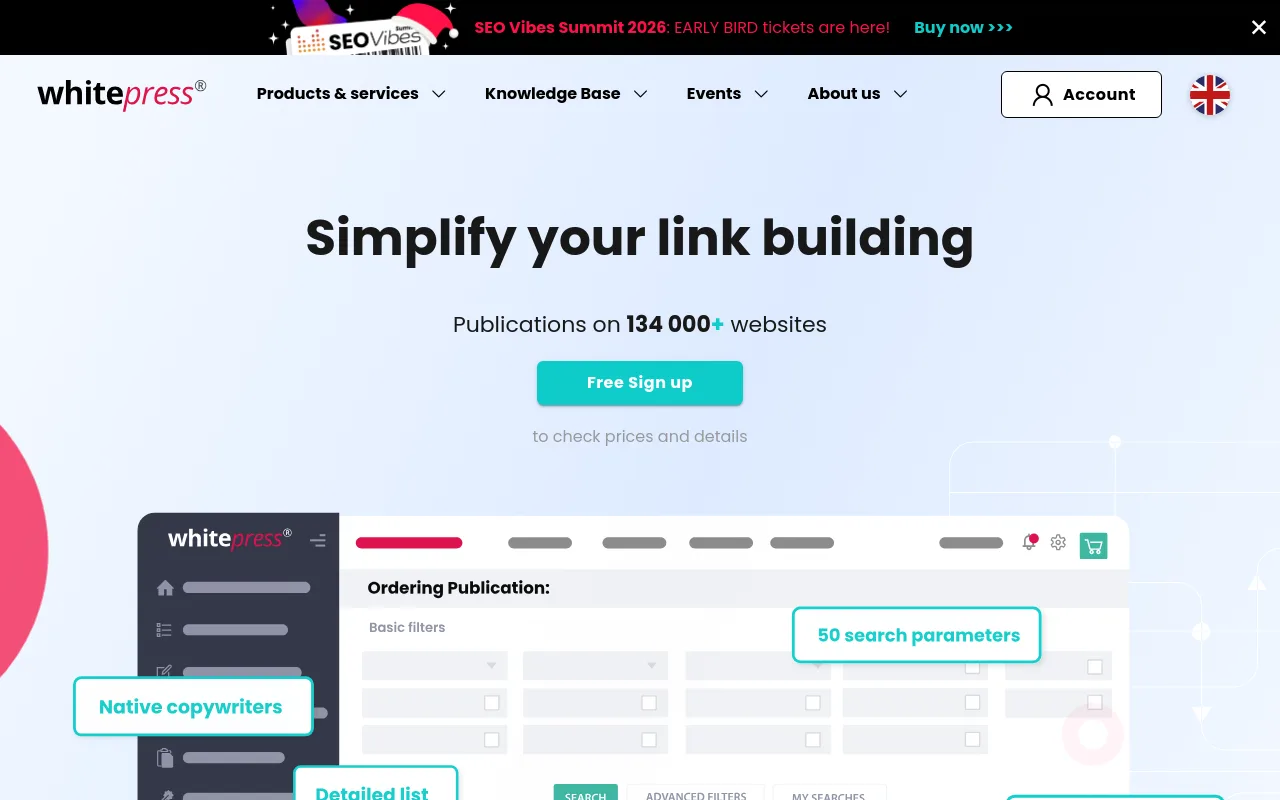
whitepress.com is widely used for sponsored content and link acquisition at scale, with a strong emphasis on process and a broad catalog. The platform highlights structured quality scoring and long-term publication expectations, which can be useful if the goal is stability rather than short bursts. For teams juggling multiple markets, WhitePress’s approach is often attractive because it feels closer to a mature content operations tool than a simple list of sites.
It also provides multiple routes to an outcome (publication, copywriting, and related services), which is helpful when internal writing resources are limited.
Best for: agencies and in-house teams that want structure, catalog breadth, and a more “platform” experience for managing placements.
Watch-outs: large catalogs can tempt teams to prioritize metrics over fit. In 2026, relevance and editorial realism matter more than “just getting a link.”
4. collaborator.pro
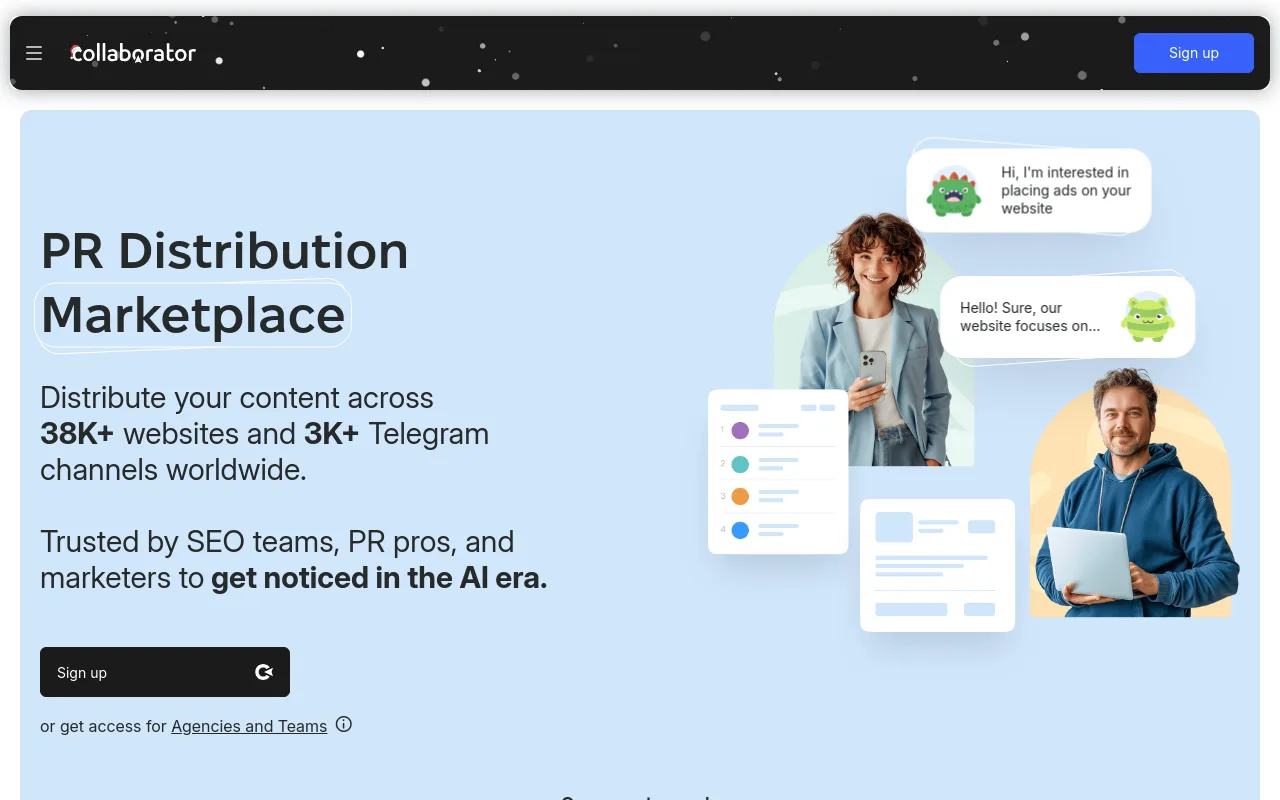
collaborator.pro positions itself as a distribution marketplace spanning tens of thousands of websites and additional channels. A major benefit in 2026 is coverage across languages and regions, which makes it useful for international brands or campaigns that need diversified footprints. The platform messaging emphasizes scale and speed, which can be valuable if timelines are tight and you need many placements across varied markets.
From a quality perspective, the key is using its breadth carefully: focus on sites with real topical alignment, consistent publishing, and a clear audience. The platform is most effective when used as a “shortlist builder” rather than a place to buy everything at once.
Best for: multilingual campaigns, agencies managing clients across regions, and teams that need a wide catalog quickly.
Watch-outs: speed can work against you. If briefs are vague, placements may become generic and easier for search systems to devalue.
5. prnews.io
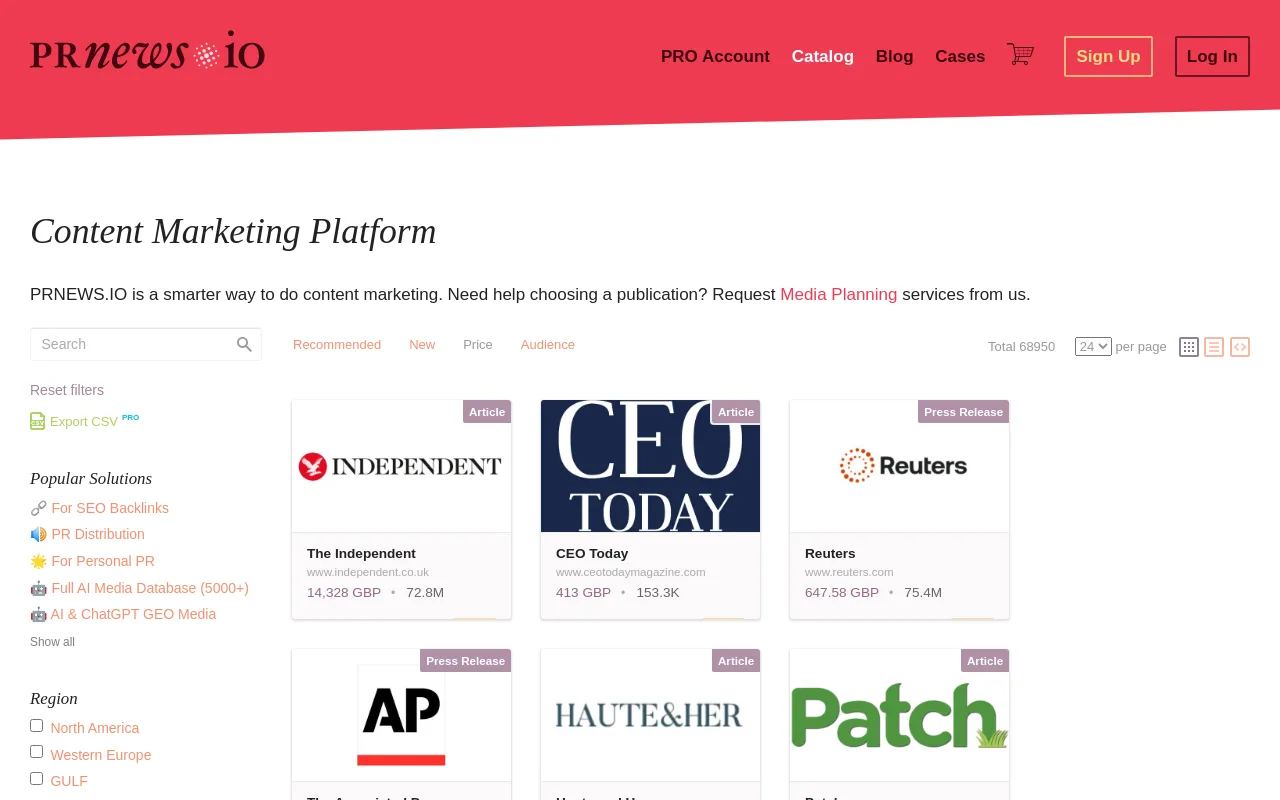
prnews.io leans into the “content marketing and PR” angle, which matters more in 2026 than it did a few years ago. The reality is that many of the safest SEO wins now look like brand and editorial wins: credible mentions, contextual citations, and placements that make sense beyond pure ranking manipulation. Platforms that can support that style of distribution can be more future-proof than marketplaces that sell only the narrow promise of “dofollow backlinks.”
prnews.io can be a strong fit for campaigns where visibility, reputation, and searchable brand presence are part of the goal. Used correctly, placements can support both referral value and broader trust signals.
Best for: brand-forward campaigns, reputation support, and teams who want placements that look more like publishing than link buying.
Watch-outs: “PR-style” distribution still needs editorial discipline. A low-quality article on a mismatched site is still low-quality, even if it’s labeled PR.
6. getfluence.com
getfluence.com is positioned as a marketplace for sponsored content campaigns, with a premium framing that resonates with 2026 realities: being present on trusted, thematic sites can help with brand recognition in both classic search and AI-driven answers. When the target is credibility (not just a link metric), higher editorial standards and stronger publisher brands can make a real difference.
This type of platform is often most effective when paired with strong content: original insights, data, or a real story angle. In other words, treat placements like publishing, not like a checkbox.

Best for: brands that want higher-trust placements and are willing to invest in stronger content and publisher quality.
Watch-outs: premium positioning often means higher costs. ROI improves when placements are selected for audience fit, not just authority.
7. bazoom.com
bazoom.com presents itself as a link building marketplace with a large inventory and a streamlined “pay for what you need” model. For 2026 workflows, platforms like this can be useful when you need to move fast, test multiple niches, or build a diversified list of placements without long onboarding cycles.
Because inventory size can be a double-edged sword, the best way to use it is to define strict acceptance rules upfront: topical match, natural placement context, and content quality requirements. The platform is most valuable when it helps teams avoid manual outreach overhead while still preserving editorial realism.
Best for: teams that want a fast-moving workflow and wide inventory for diversified placement testing.
Watch-outs: without strict standards, big catalogs can produce inconsistent outcomes. In 2026, inconsistency is often the hidden cost.
How to use backlink marketplaces without creating obvious risk signals
The fastest way to turn a marketplace into a liability is to treat it like a bulk link dispenser. The safer 2026 approach is closer to editorial operations: fewer, better placements, selected for topical relevance and written as if they were going to be read by real subscribers of the site.
Practical safeguards that actually work:
- Start with topical fit, not metrics: pick sites where your product or content naturally belongs in the site’s existing categories.
- Avoid “same template everywhere” briefs: if every article uses the same structure, anchors, and pitch, patterns emerge quickly.
- Prefer contextual references over forced anchors: branded or natural anchors typically age better than aggressive exact-match anchors.
- Be explicit about disclosure expectations: sponsored content should be treated as sponsored content; trying to “hide” it can backfire.
- Think beyond dofollow: a placement that earns clicks and trust can be valuable even if link attributes limit direct ranking impact.
- Do an indexation and stability check: confirm the page is indexable, remains live, and stays in a public section over time.
One more detail that matters in 2026: if a publisher is hosting third-party content at scale with minimal oversight, that can drift into “site reputation abuse” territory. Even if a marketplace enables the purchase, it doesn’t mean it’s a good idea for long-term SEO. Choose publishers that behave like publishers, not like upload portals.
Budgeting and workflow tips for 2026 campaigns
Most teams waste money in two places: (1) buying placements that don’t match the brand or topic, and (2) paying for content that exists only to carry a link. A smarter marketplace workflow doesn’t start with “how many links do we need,” but with “where would a credible mention change perception and drive qualified visits?”
- Use a two-phase approach: run a small pilot (5–10 placements) to validate site quality and editorial responsiveness, then scale only what performs.
- Define “success” upfront: include at least one non-ranking metric (referral clicks, branded search lift, assisted conversions, newsletter signups).
- Build a placement mix: combine a few higher-trust publications with a broader set of niche-relevant sites to avoid a single footprint.
- Maintain a content standard: even sponsored content should have a reason to exist—examples, comparisons, data, or original insights.
- Track survival: log whether the page stays public, indexable, and unchanged. Stability is part of the ROI.

Quick checklist: choosing the right marketplace for your next campaign
If only a few minutes are available, this checklist prevents most expensive mistakes:
- Does the platform make it easy to filter for topical relevance?
- Are publication rules and expectations explicit (including longevity)?
- Can you evaluate publisher quality beyond a single authority metric?
- Is the workflow structured (briefs, revisions, communication, disputes)?
- Will the final article read like something the site would publish anyway?
- Is there a plan for diversification (topics, sites, formats) to avoid footprints?
Final takeaway: the best backlink marketplaces in 2026 are the ones that help teams act like publishers—prioritizing fit, quality, and stability—rather than chasing quick wins. Pick one platform to pilot, define strict acceptance rules, run a small test batch, and scale only the placements that look credible, remain stable, and support real business outcomes.